
 Programs & research
Research and programs
How the Institute’s research reaches students, practitioners, and judges.
Focus areas

AI governance and regulation
Faculty research on AI governance and machine learning regulation.
Digital legal systems
Faculty research on how legal systems work in digital environments.
AI in legal practice
Litigation, discovery, legal research, small-firm practice, and BigLaw efficiency.
Access to justice and judicial ethics
How AI affects access to justice, and how judges can safely use it.
Risk, bias, and failure modes
Hallucinations, algorithmic bias, privacy breaches, and manipulation, and how to reduce them.

Current research
A research-computing grant supports locally-controlled installations of open models, sandboxed from any commercial platform, to stress-test the guardrails a law firm would actually depend on — confidentiality across client matters, resistance to jailbreaking, and where a model hallucinates under legal-narrative pressure.
Why AI Lies to Lawyers
Examining token cost and deceptive behavior in legal AI outputs.
Can AI Ever Really Be Safe?
Testing guardrails against jailbreaking, cross-account leakage, and induced hallucination.
Featured scholarship

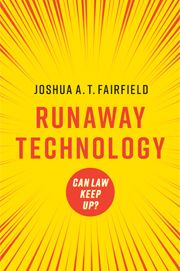
Recent articles by Prof. Fairfield include “The Last Human Question: Generative AI’s Existential Threat to Consensus and Law” (West Virginia Law Review) and “Generative Adversarial Discrimination” (W&L Journal of Civil Rights and Social Justice). All publications →